



Donald Trump won two presidential elections by promising to put American workers first. On the eve of the 2026 midterms, halfway through his second stint in the White House, how do American workers judge the president’s economic stewardship and what do they think about the key economic issues of our time?
A new national survey from EIG and Echelon Insights finds that American workers across partisan divides think the president’s economic agenda has failed them — and on the single issue they care about most, the cost of living, workers say the president’s policies have made their problems worse.
Conducted September 1–8, 2026, with a representative sample of 1,507 American workers, the survey addresses not only economic policy issues but also workers’ assessments of their own incomes, savings, and career prospects in the age of AI.
Below we highlight just a few of the survey’s key and surprising findings, concluding with the big takeaways for the midterm elections. To see the comprehensive findings presented in a user-friendly slide deck, click here.
Affordability: Still Waiting
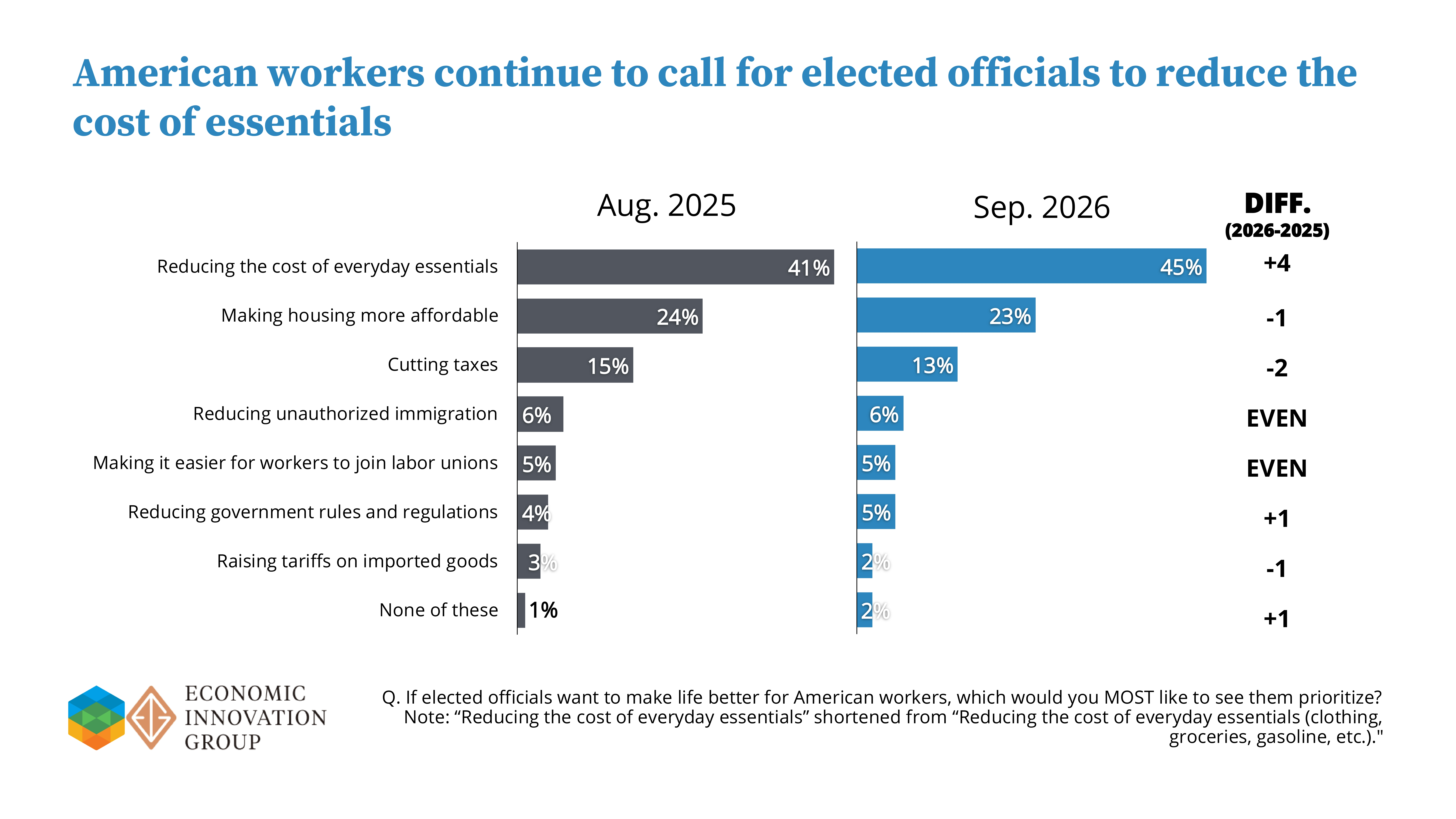
The costs of housing and everyday essentials continue to dominate workers’ concerns, with 68 percent saying these are the issues policymakers should be most focused on. Unlike any other issue we surveyed, affordability unites workers across political, generational, educational, racial, and gender divides.
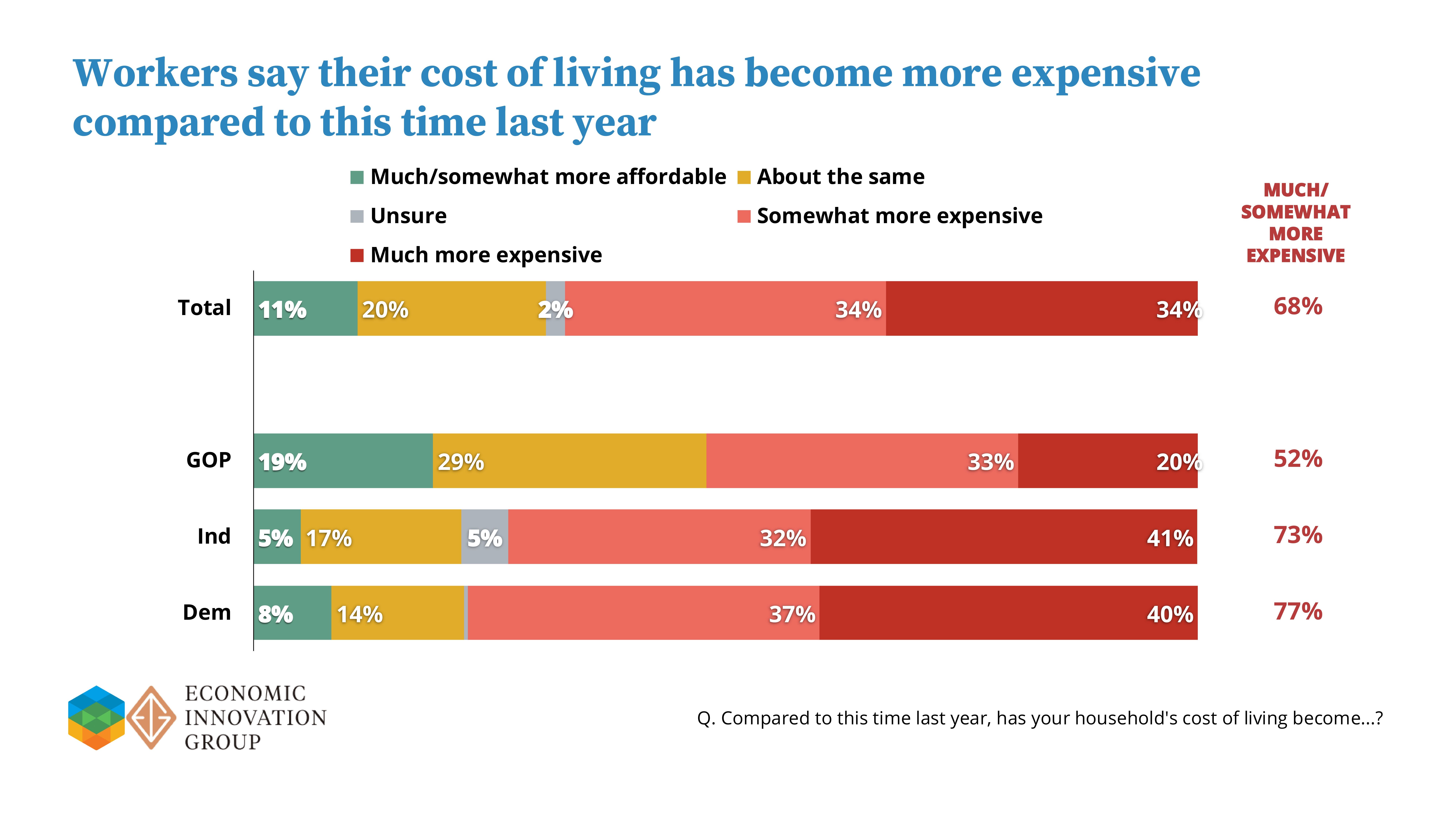
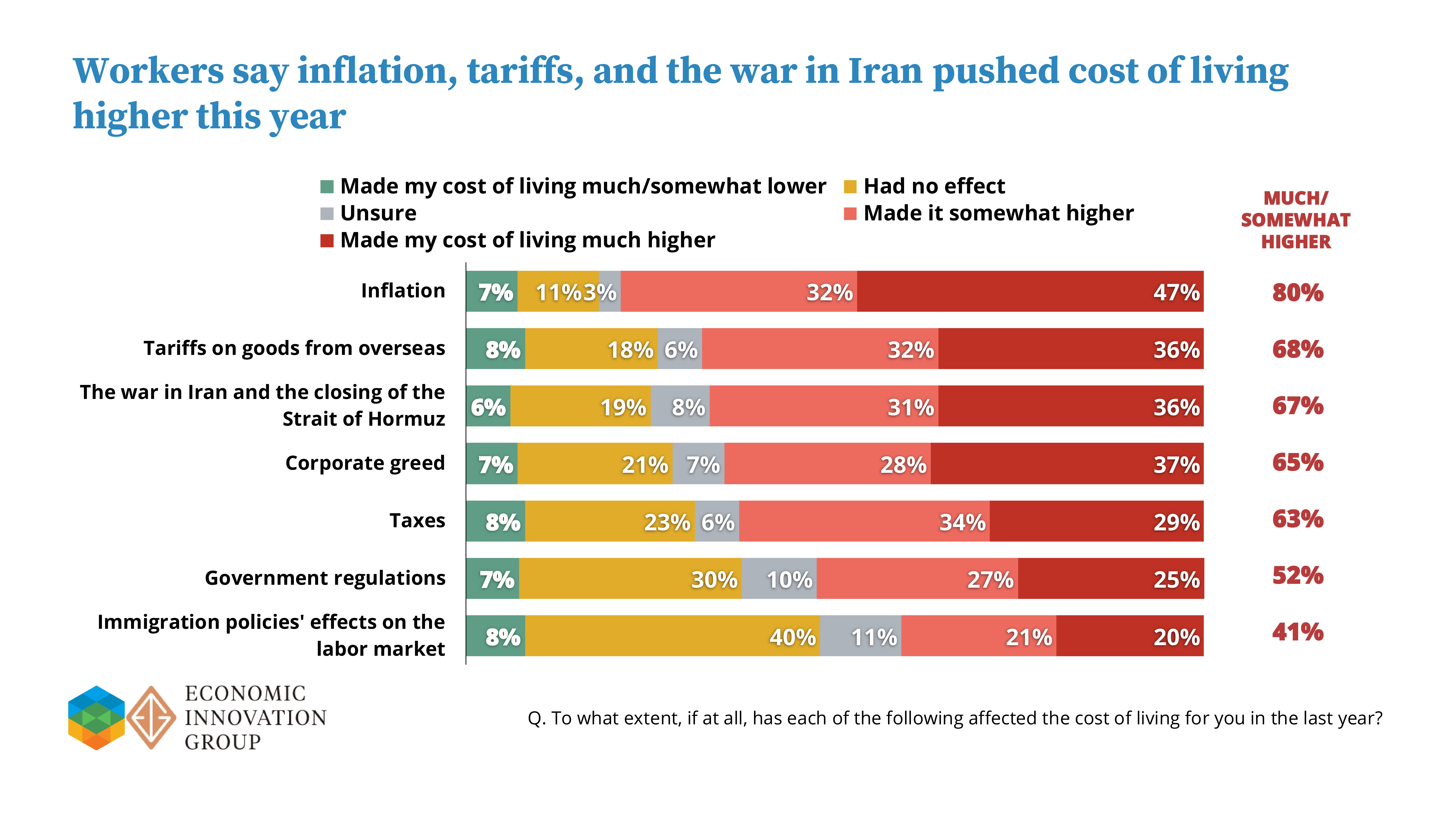
Consistent with recent data showing that real wage growth has stalled over the past year, 68 percent of workers say their cost of living has risen since last September. A mere 11 percent say that things have become more affordable.1
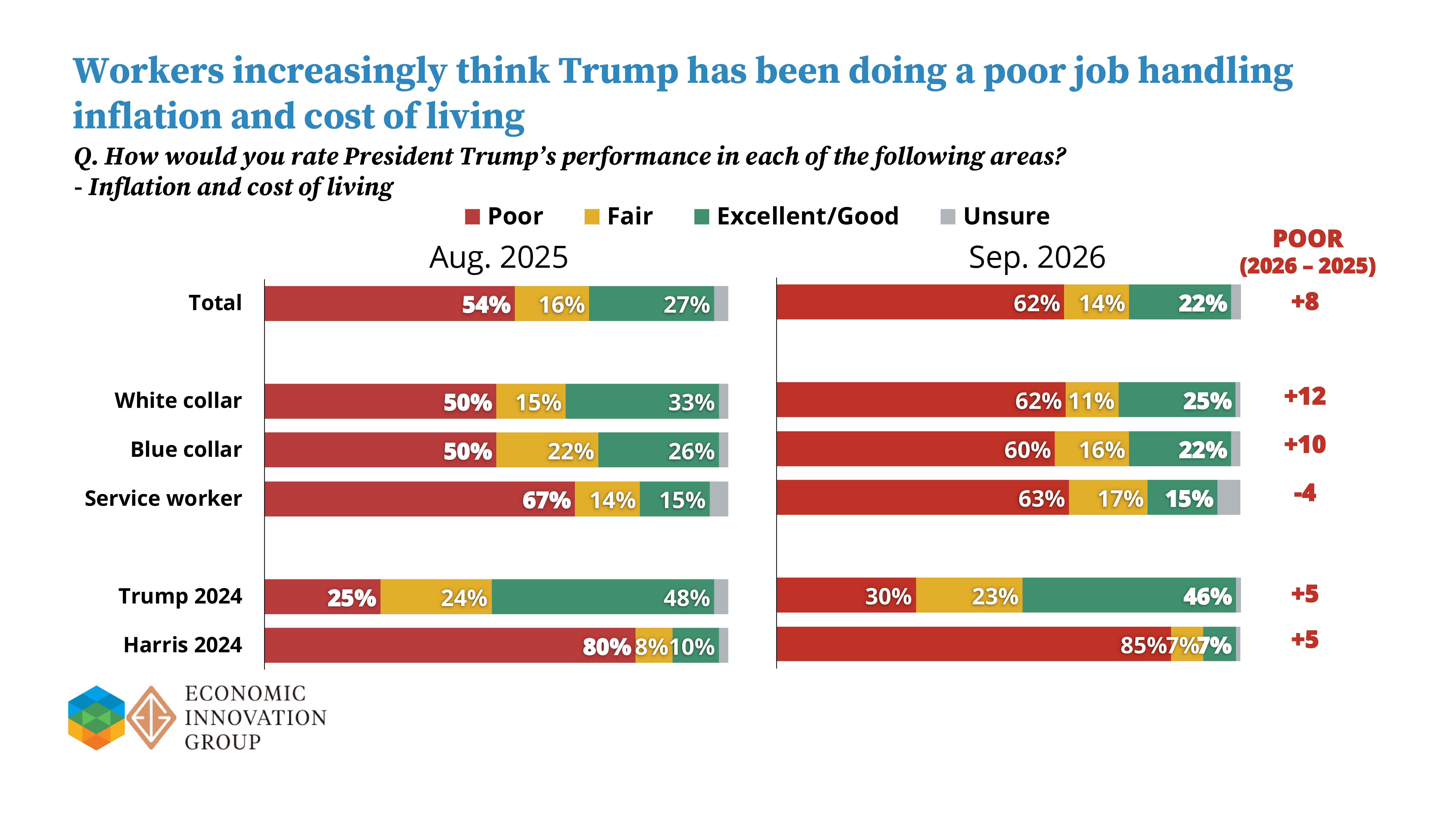
And it’s on this paramount cost-of-living issue that workers disapprove of the president’s performance the most. Only 22 percent of workers grade President Trump’s performance on inflation and the cost of living as good or excellent, compared to 62 percent who say it’s been poor. Even among those who voted for Trump in 2024, only 46 percent give him positive marks.
Tariffs: No More, Please
President Trump’s signature tariff agenda is widely unpopular with American workers.
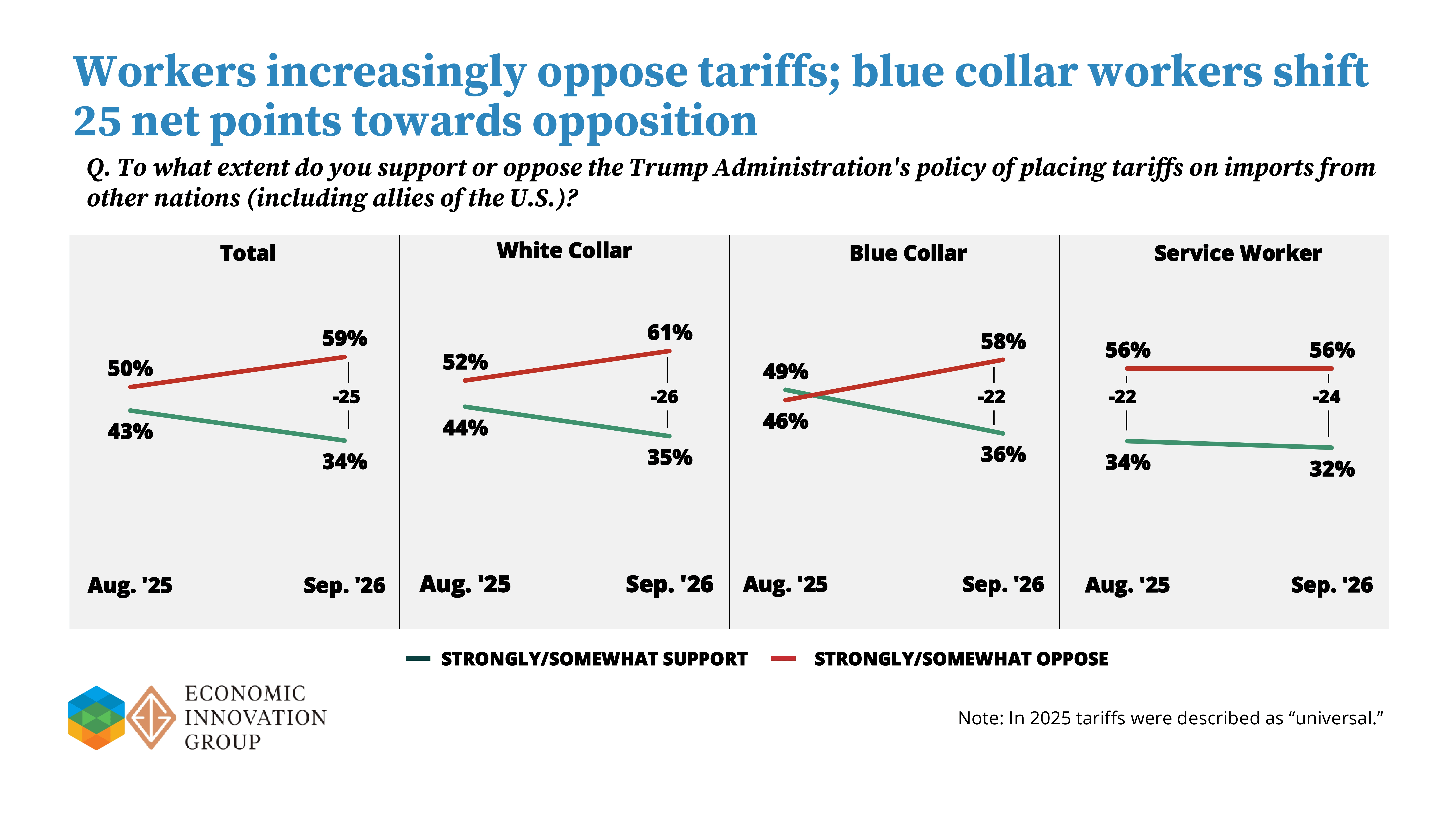
Perhaps the survey’s single most telling result is the collapse of support for tariffs among blue-collar workers — the policy’s intended beneficiaries.
While in our 2025 survey these workers favored President Trump’s tariffs by 3 points, blue-collar workers now oppose them 58 percent to 36 percent.
The reason for their opposition is clear. More than two-thirds of workers believe that tariffs have made their cost of living much or somewhat higher in the past year. A majority of workers hold that view across each and every demographic, educational, political, and occupational group.
Among Trump’s 2024 voters, it should be noted, support for tariffs has been resilient, with 69 percent continuing to back the policy. But not with much intensity: Fewer than a third of Trump-voting workers strongly support tariffs. And among GOP-voting workers, only 3 percent select tariffs as their top priority.
Support for tariffs is also highly conditional: Among the 34 percent of workers who say they approve of the president’s trade agenda, the majority say that tariffs should be pursued only if doing so does not lead to a higher cost of living and/or fewer choices for American consumers.
Immigration: When Legal, We Still Like It
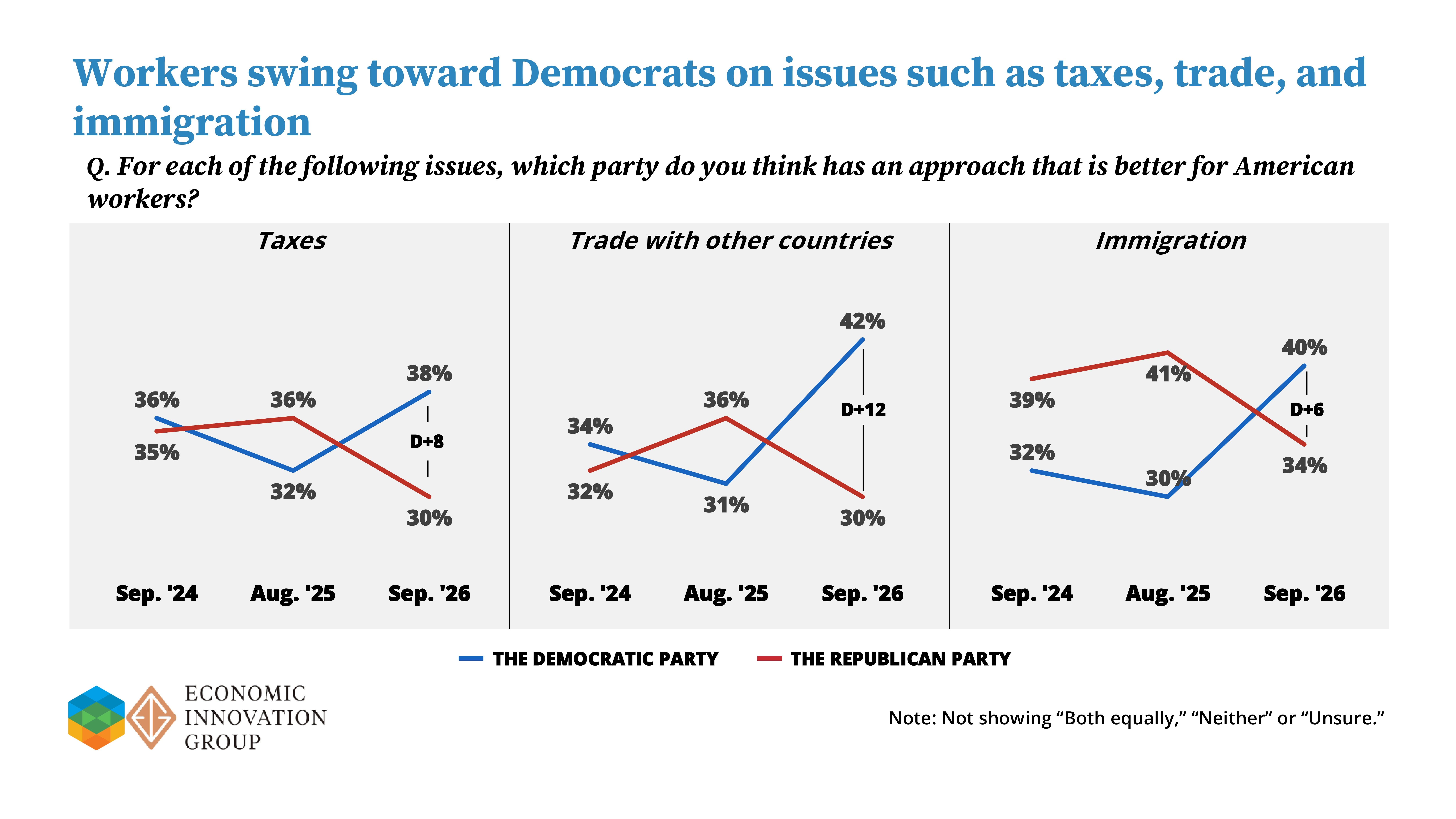
Other Trump policies have proven similarly unpopular. Most strikingly, workers have massively shifted towards trusting the Democrats more than the Republicans on immigration, just as they have on trade (and taxes).
Workers display nuanced, favorable views toward legal immigrants in general and toward high-skilled workers in particular. Fifty-one percent now say that legal immigrants are definitely or probably an opportunity for workers’ own personal careers, an 11 percentage point increase from last year. Only 19 percent view legal immigrants as a threat.
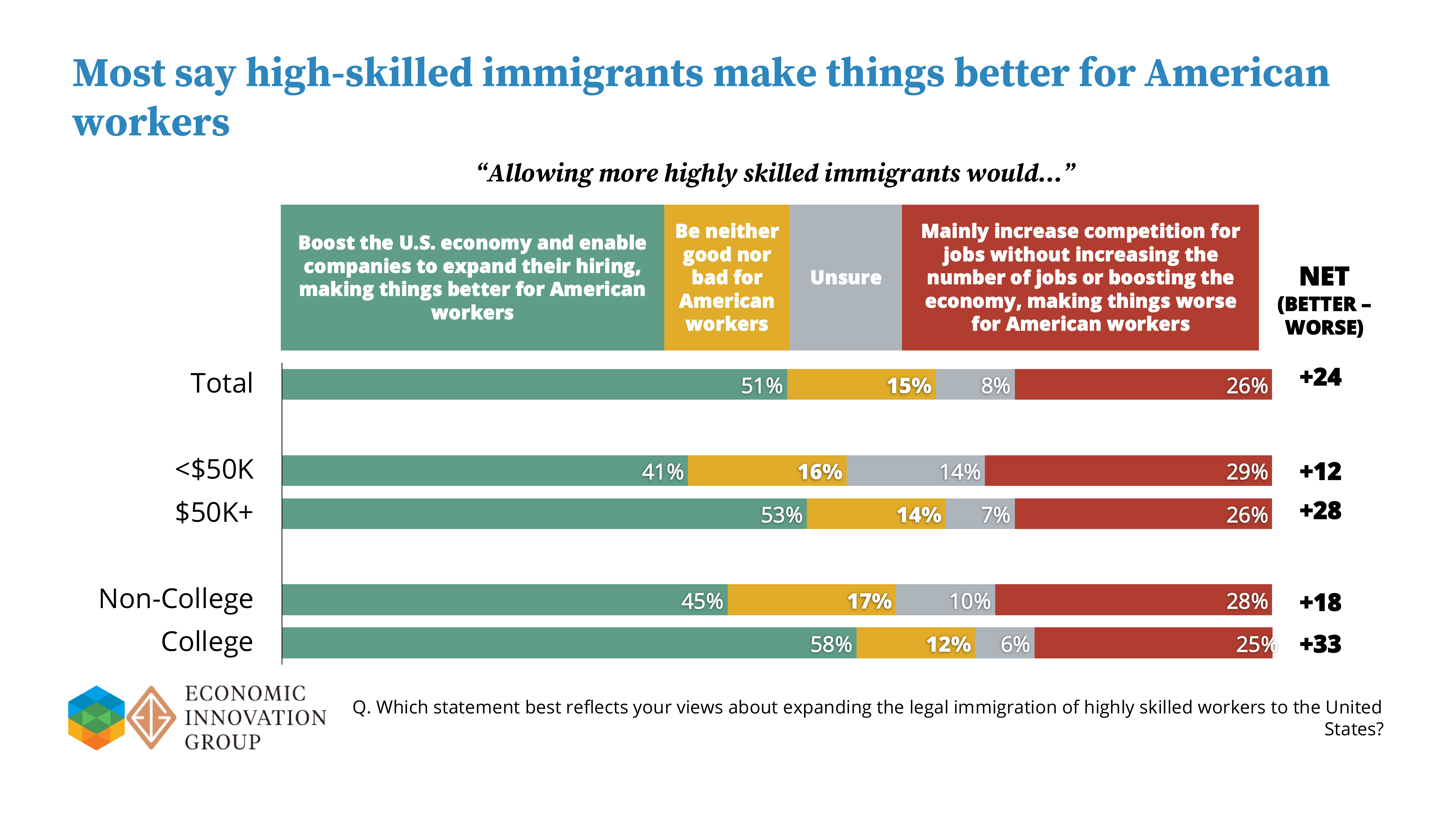
High-skilled immigration is especially popular among workers. Sixty-five percent support more of it, including 62 percent of those who voted for Trump in 2024. And 51 percent of workers agree that allowing more highly skilled immigrants would “boost the U.S. economy and enable companies to expand their hiring, making things better for American workers.”
The partisan split on immigration is a big one, though. Nearly three out of four GOP-voting workers rate the president’s performance on immigration as good or excellent, compared to only one out of four Independents and just 14 percent of Democratic-voting workers.
Company Stakes: No Thanks, You Keep ’Em
A new issue in this year’s survey is government ownership of companies, with the Trump administration having taken stakes in dozens of firms including Intel, U.S. Steel, and MP Materials. (This is not a one-party position, as the idea has also been supported by prominent politicians on the left, including Senator Bernie Sanders, Governor Gavin Newsom, and Representative Alexandria Ocasio-Cortez.)
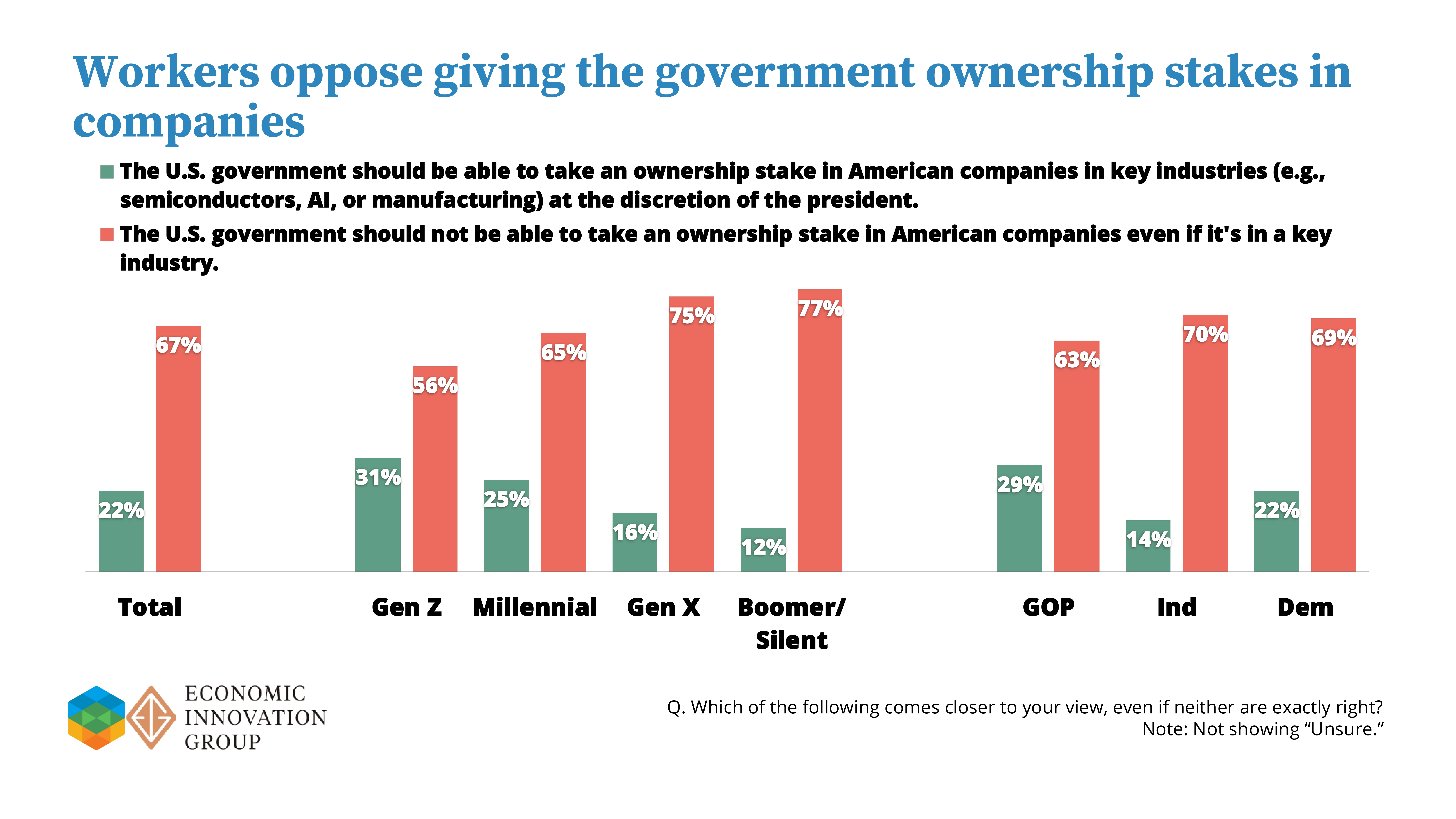
Big majorities of workers across all parties believe the government “should not be able to take an ownership stake in American companies even if it’s in a key industry,” with only a small share believing the government should be able to take ownership stakes at the discretion of the president.
There was more disagreement between workers of different generations, with Gen Z workers the most open to the idea (though support is still a minority view for them).
AI: A Threat (But Not When I Use It)
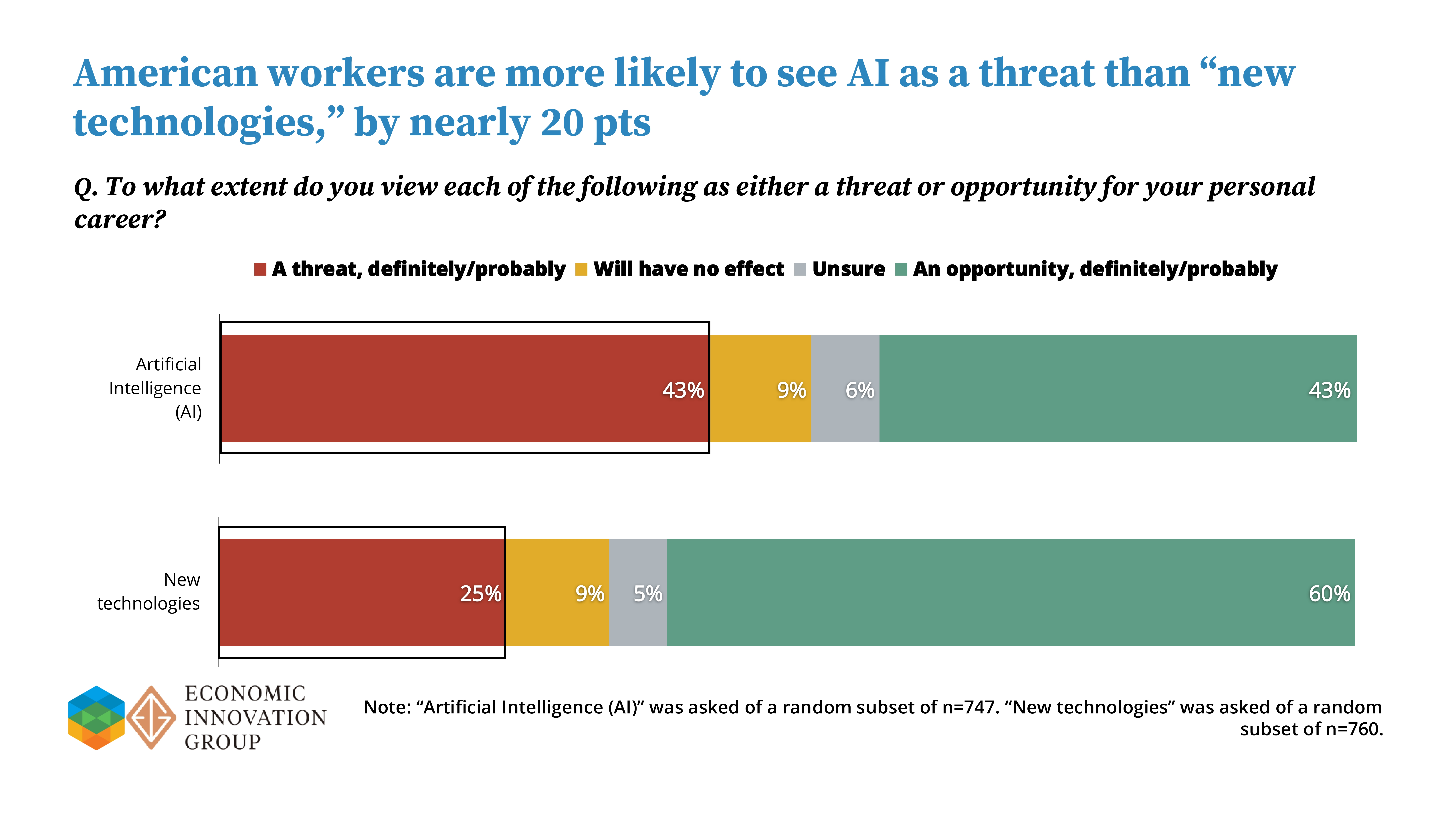
American workers have a favorable view of technological progress overall, with 60 percent believing that “new technologies” are an opportunity for their personal careers, compared to only a quarter who believe they are a threat.
But views on artificial intelligence specifically are much more mixed, with 43 percent of workers calling AI an opportunity and the exact same share calling it a threat.
Politically, workers appear to be more aligned against AI than aligned with it.
Forty-nine percent of workers say that a candidate’s pledge to fight against AI companies would make them more likely to vote for that candidate, while just 17 percent say such a pledge would make them less likely to vote for that candidate.
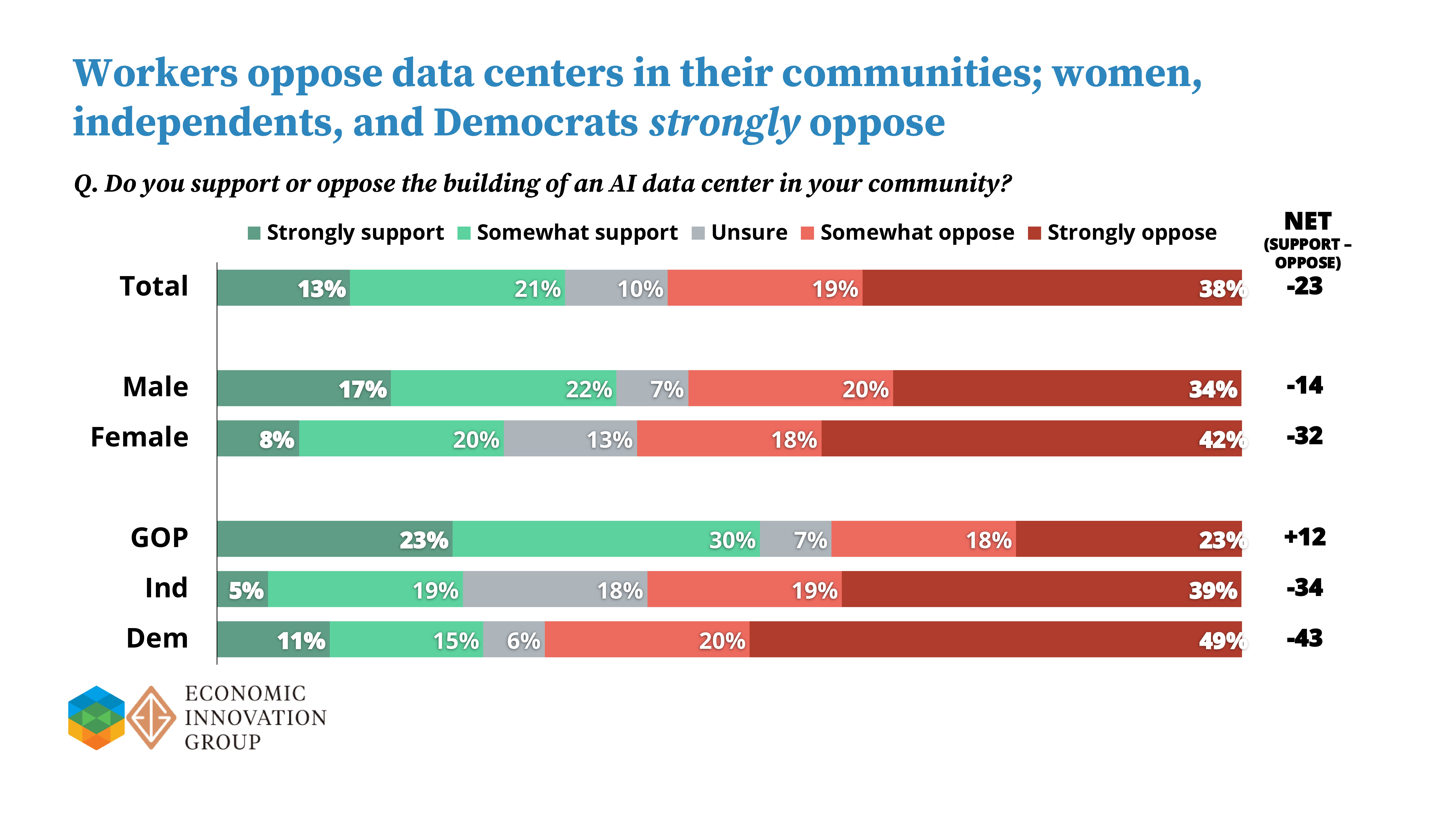
Data centers are similarly unpopular, with a majority of workers opposing construction in their own communities. Fifty-three percent of workers say that a candidate’s pledge to fight against data centers would make them more likely to vote for that candidate. Only 14 percent say such a pledge would make them less likely to.
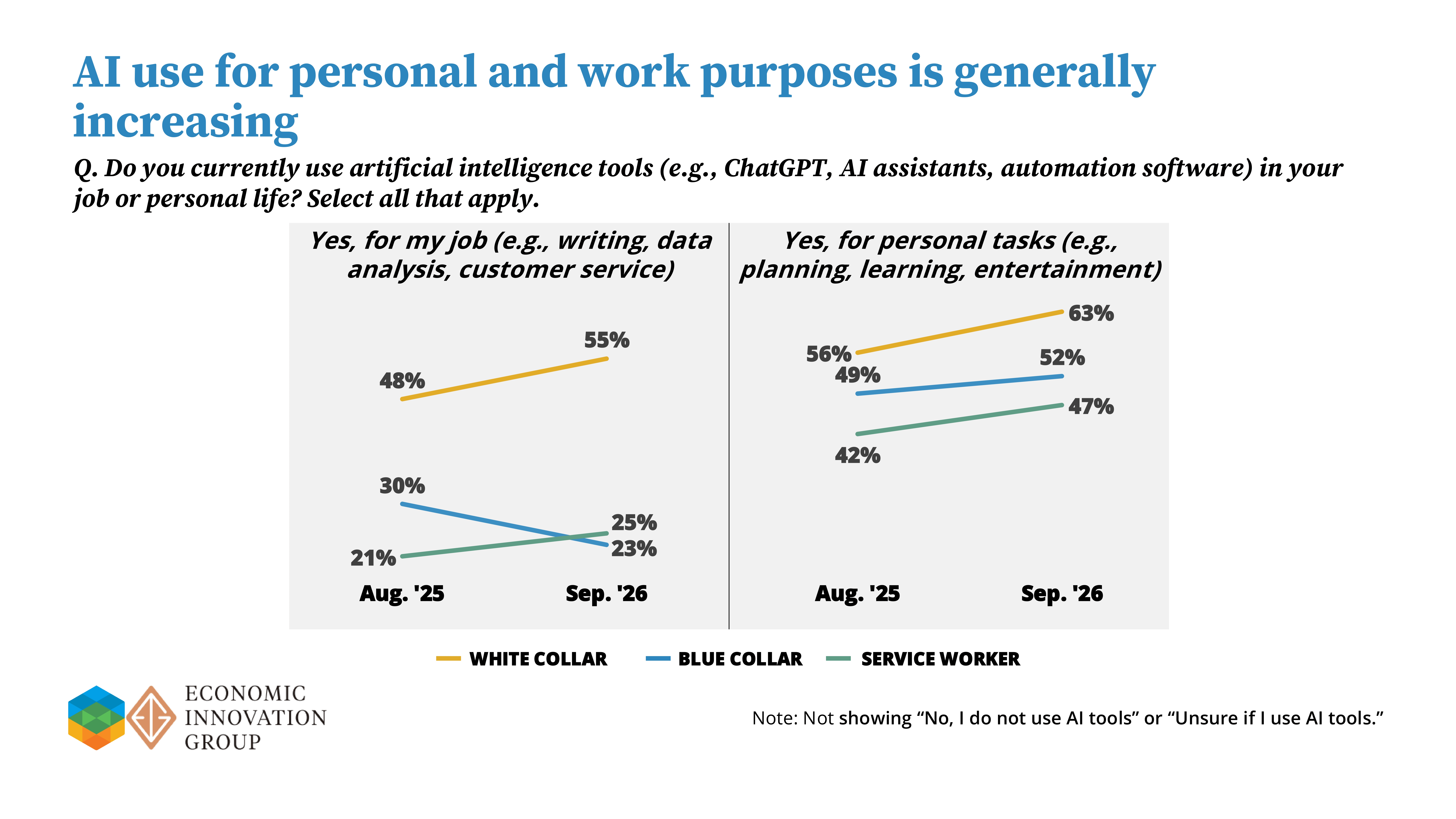
But these results emerge in the context of limited real-world AI usage among workers. Only 39 percent of workers say they use AI tools for their jobs. Even among white-collar workers, just a small majority (55 percent) use AI at work. But usage is clearly rising, especially for personal tasks.
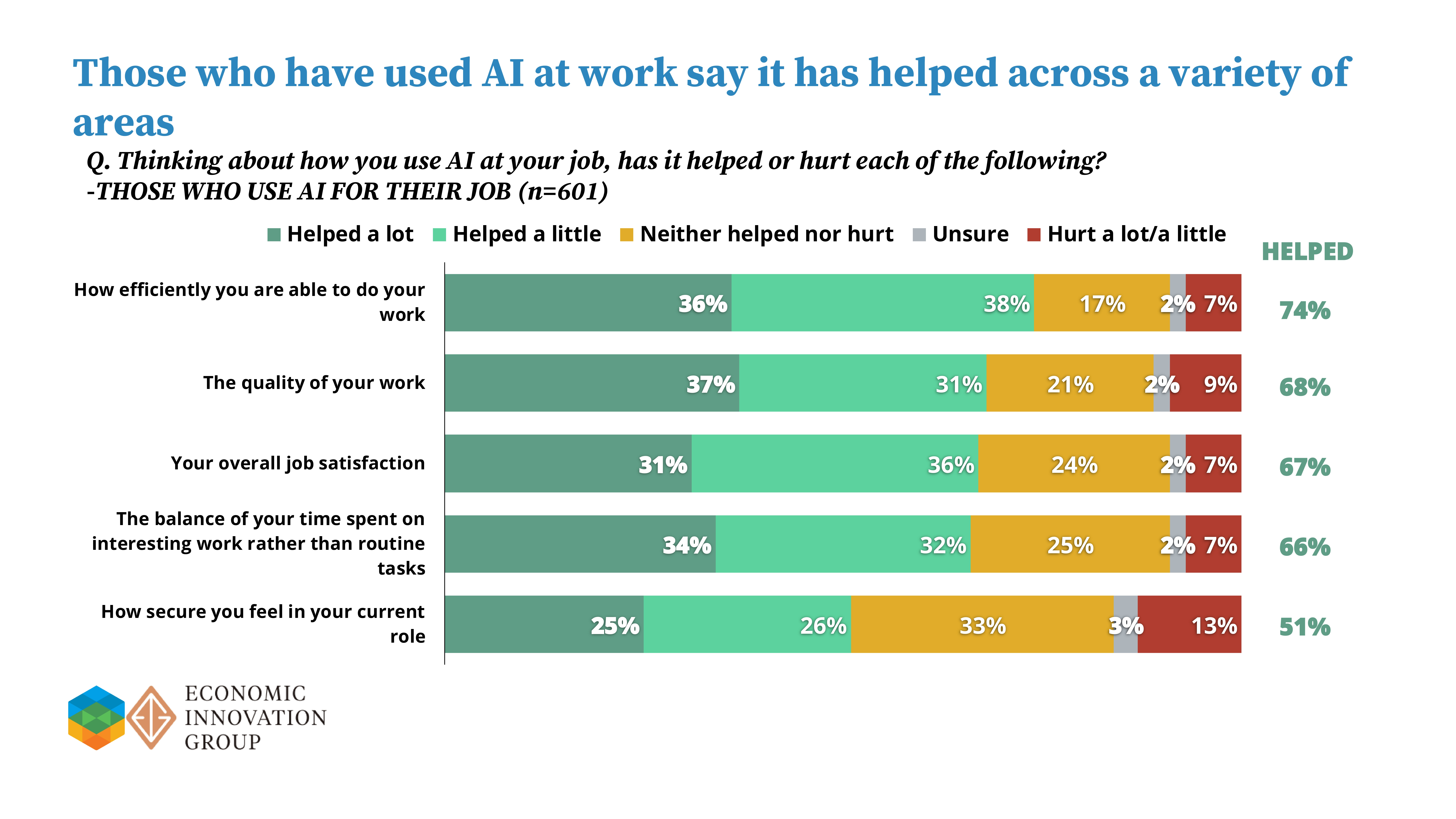
Importantly, among those who actually have used AI at work, the large majority say it has helped them be more efficient, has improved the quality of their work, and has enhanced their job satisfaction. These findings suggest the possibility that opposition to AI may soften among workers if usage continues rising.
It’s worth underscoring that white-collar workers, the group that experts believe is most exposed to AI disruption, are the least likely of any occupational group to call AI a threat, the most likely to actually use it, and the most likely to want the pace of AI development to speed up. And among users, white-collar workers are by far the most likely to say it has improved their work quality.
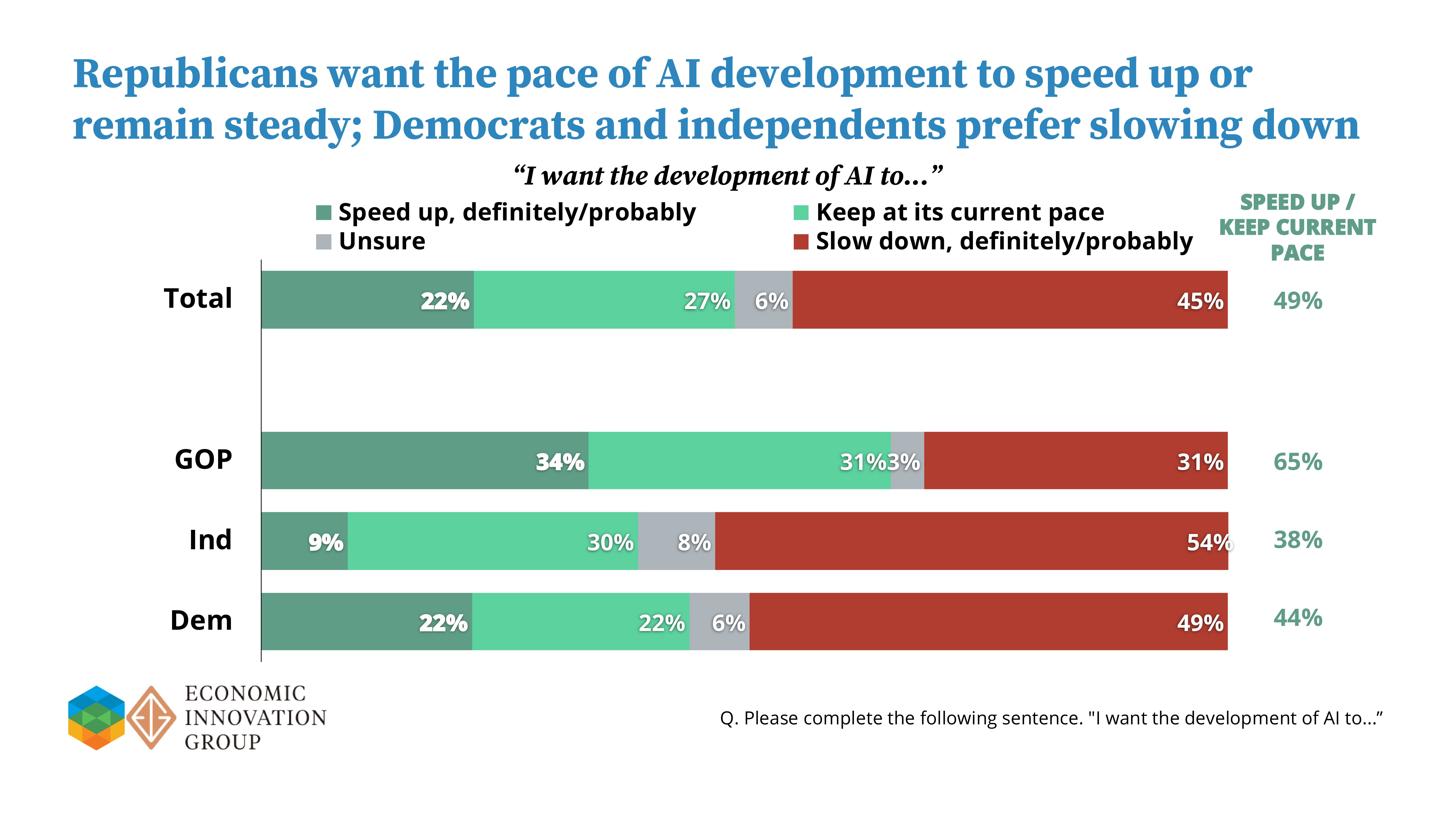
Perhaps most surprising of all is that, for all the concerns about AI-driven job displacement and opposition to data centers, a plurality of workers (49 percent) actually supports maintaining or accelerating the pace of development. As with other issues related to AI, the “speed up or slow down” issue reveals deep partisan divides: 65 percent of GOP-aligned workers want to keep up or increase the current pace, compared to only 38 percent of Democratic-aligned workers and 44 percent of Independents.
I Like My Job, but Will I Have to Work the Same One Forever?
Workers’ pessimistic evaluations of the economy, job market, and cost of living do not always extend to their own circumstances.
Forty percent of workers say they are more optimistic about their personal financial situations than they were this time last year, while only 29 percent say they are less optimistic.
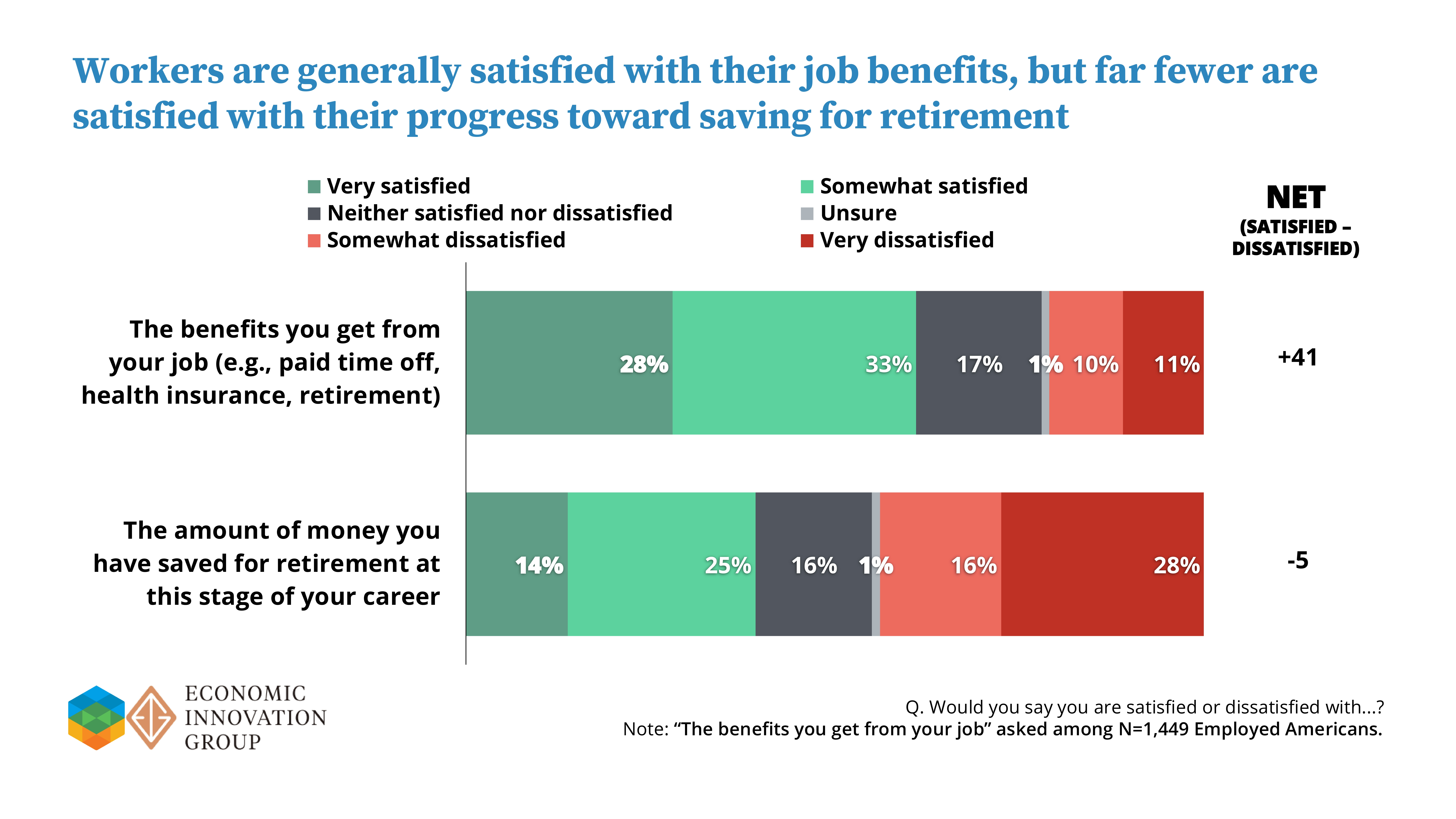
About two-thirds of workers say they are satisfied with their current jobs, versus just 14 percent who say they are unsatisfied. And vastly more workers are satisfied with their careers and the amount of money they earn than are dissatisfied.
But there is an outlier: retirement savings.
More workers are dissatisfied with the amount of money they have saved for retirement than are satisfied, a surprising contrast to their overall satisfaction with the benefits they get from their jobs.
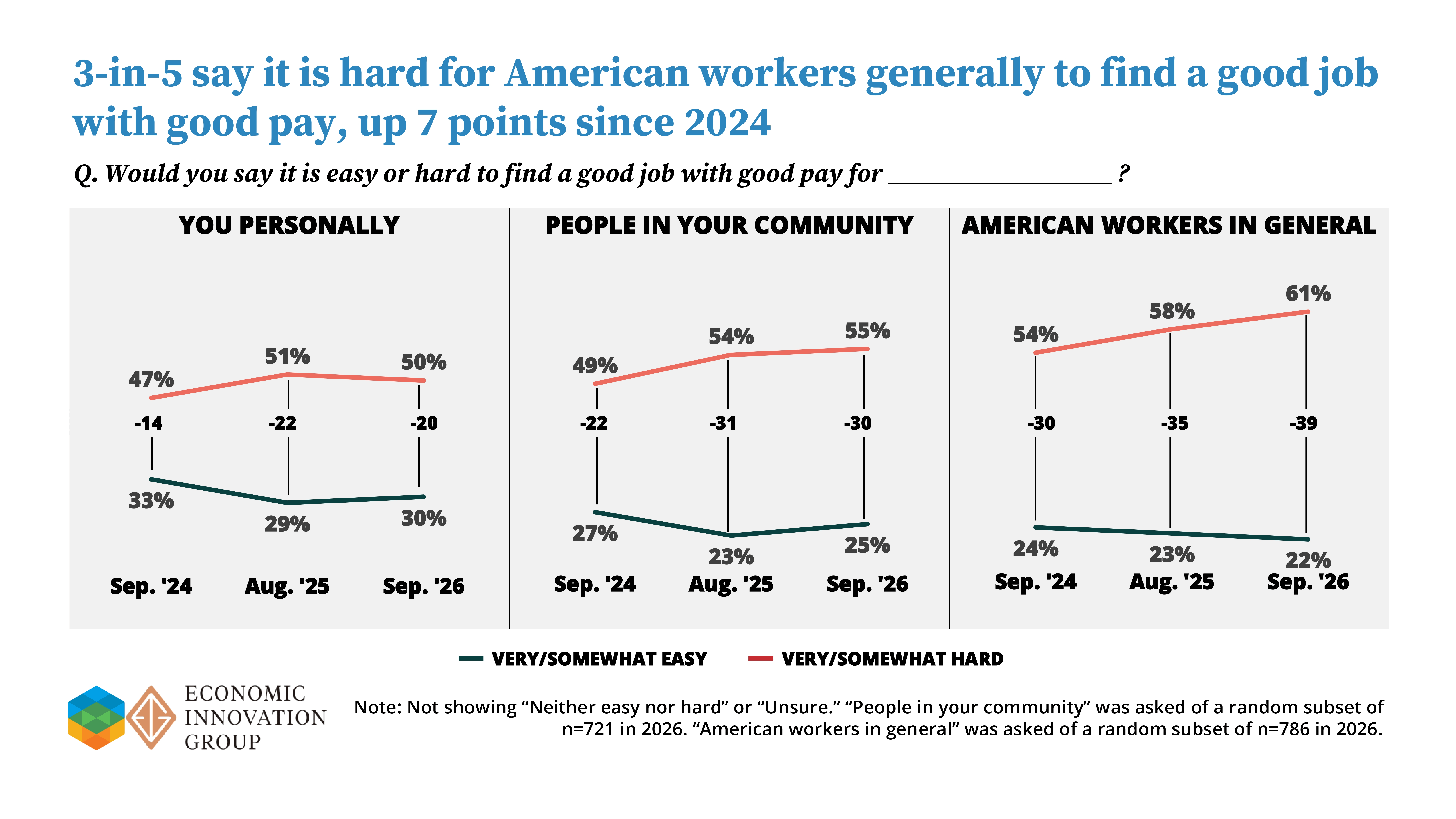
Despite their broad work satisfaction, when asked about finding new jobs, workers are less sanguine. Half of workers say it would be hard to find a good job with good pay for them personally, and even higher shares believe it would be hard for someone in their community or American workers in general to find a good job with good pay. This negative sentiment has grown over time.
Socialism Is Cool, Except for the Socialist Parts
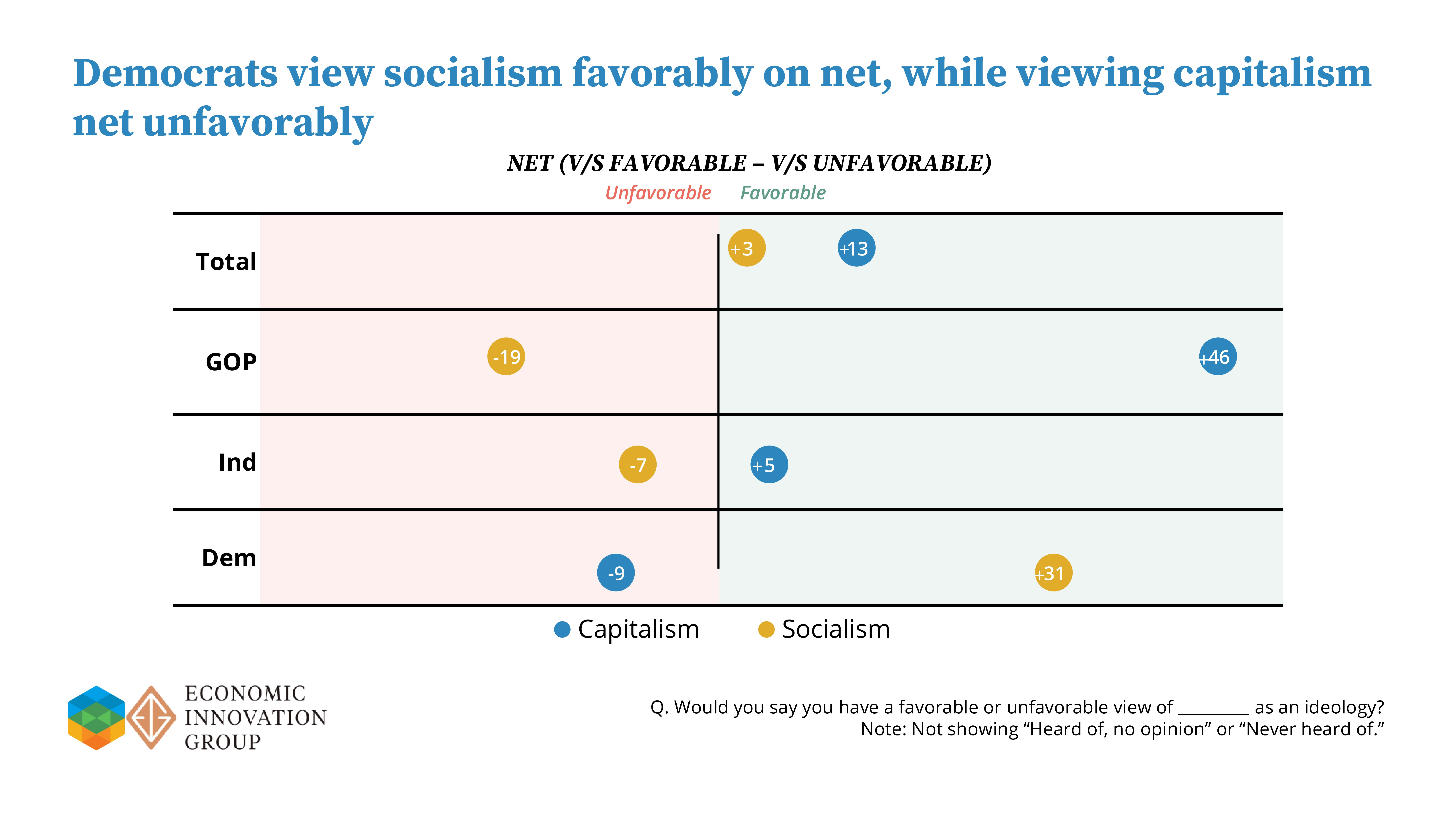
Workers overall still prefer Capitalism to Socialism. But Democratic-voting workers now have a stunning +31 net favorable view of Socialism alongside a net unfavorable view of Capitalism, possibly showing the rising influence of the Democratic Socialists of America.
Intriguingly, however, Democrats also overwhelmingly believe that their taxes are too high (84 percent) and that the government should not take stakes in private companies (69 percent).
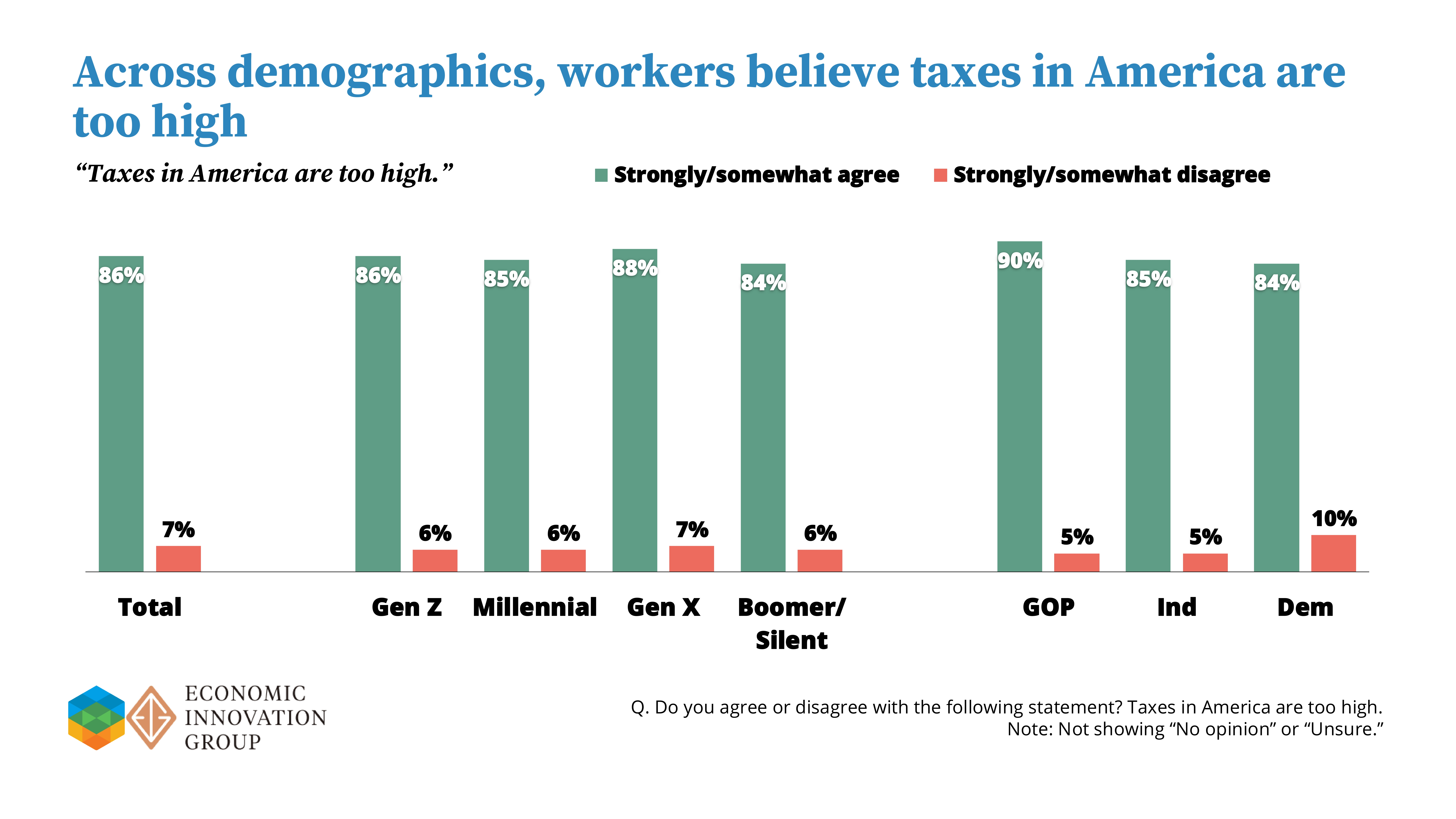
We don’t know what to make of it, but we find the results amusing enough to pass along.
Midterm Takeaways
These survey results should be sobering for Republicans.
When asked which party they think has the better approach on the cost of living, workers now favor Democrats 44 percent to 27 percent.
In our survey ahead of the 2024 election, for comparison, workers favored the Democratic Party’s approach by just 1 percentage point — 37 percent to 36 percent. But now, ahead of the midterms, even two out of five workers who voted for Trump in 2024 do not favor Republicans on this question.
Asked for a comprehensive evaluation, workers overall now favor Democratic Party candidates at 54 percent to 39 percent. Among workers who are “extremely” likely to vote, 59 percent favor Democratic candidates versus 39 percent for Republicans.
Black and Hispanic workers now favor Democrats 69 percent to 27 percent and 63 percent to 30 percent, respectively. White and AAPI workers favor Democrats too, but by slimmer margins. The vaunted multiracial working-class coalition that the Republicans assembled in 2024 has, it seems, been undone by the party’s management of the economy.
In terms of household income, the only workers who favor Republicans are those making between $30,000 and $50,000.
Among workers with household income above $200,000, Democrats are preferred 67 percent to 28 percent.
When workers are asked which party they think has an approach that is better for American workers’ interests, they favor Democrats over Republicans 44 percent to 29 percent — a significant swing in their direction from our poll two years ago. Democrats now have the advantage here among white-collar workers (+14 points), blue-collar workers (+11), and service workers (+16).
When asked to rate President Trump’s performance on the economy generally, 54 percent of workers express that his performance has been poor, versus 28 percent who rate it good or excellent.
American workers are dissatisfied with the direction of the economy and dissatisfied with economic policies that fail to deliver higher wages and greater purchasing power. The lesson of recent elections is that these sentiments spell bad news for the incumbent party — even when other economic indicators, such as job growth and the stock market, are robustly positive.
It’s the cost of living, stupid. Always was.
For the full slide deck that accompanies this post in addition to all updates of the American Worker Project from the Economic Innovation Group, please click here.
Inconsistencies between detailed and aggregated values of less than a percentage point are caused by rounding to integer values.